


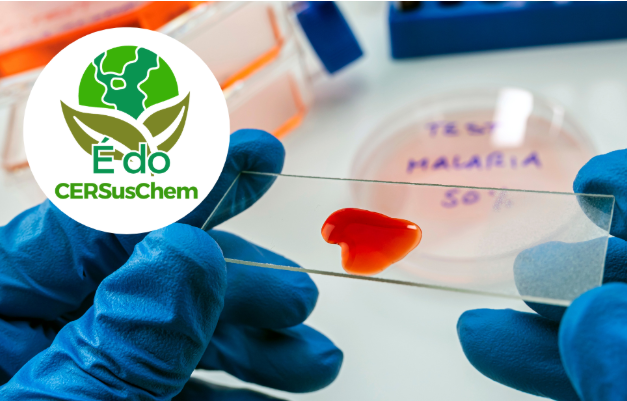
Researchers identify new promising compounds for the treatment of drug-resistant malaria
Although malaria is a preventable and treatable disease, it remains a major global public health challenge. According to data from the World Health Organization (WHO), approximately 282 million malaria cases and more than 600,000 deaths were recorded worldwide in 2024, with Africa accounting for the largest share of cases. The disease is caused by protozoan parasites of the genus Plasmodium and is transmitted through the bites of infected female mosquitoes of the genus Anopheles. Among the parasite species, Plasmodium falciparum is the most concerning because it is associated with the most severe form of the disease and with the growing resistance of the parasite to currently available treatments. In this context, researchers from the Federal University of São Carlos (UFSCar) and the University of São Paulo (USP) evaluated new compounds with the potential to act against drug-resistant forms of P. falciparum.
The results were recently published in the scientific journal ACS Omega by a team led by Professor Arlene Gonçalves Corrêa, Full Professor in the Department of Chemistry (DQ) at UFSCar and Director of the Center of Excellence for Research in Sustainable Chemistry (CERSusChem), and Professor Rafael Victorio Carvalho Guido, from the São Carlos Institute of Physics (IFSC) at USP. In the study, the researchers synthesized and evaluated the antiplasmodial activity of several indole-based peptidomimetics, an aromatic organic compound widely explored in the development of new drugs. Peptidomimetics are synthetic molecules designed to mimic natural peptides while offering greater stability and improved ability to reach biological targets.
Among the compounds investigated, two stood out for their ability to inhibit different drug-resistant forms of the parasite, including strains resistant to multiple antimalarial drugs. These compounds also exhibited low toxicity toward human cells and high selectivity against the parasite. In addition, the experiments revealed a slower mode of action compared with some current treatments, but additive effects were observed when the compounds were combined with artesunate, a derivative of artemisinin obtained from the plant Artemisia annua. This finding is particularly relevant because artemisinin-based combination therapies are considered the gold-standard treatment for malaria in many regions of the world. Therefore, combining a fast-acting drug such as artesunate with compounds that provide sustained activity may improve treatment efficacy by eliminating parasites that survive the initial stages of therapy.
To understand which structural features of the compounds were responsible for the observed antiplasmodial activity, the researchers performed structure-activity relationship analyses. Using this approach, small modifications were introduced into specific “building blocks” of the molecules to evaluate how these changes affected activity against P. falciparum, including the addition or substitution of chemical groups. This search for bioactive molecules is one of the research focuses of CERSusChem, based at the Department of Chemistry of UFSCar, and the Center for Research and Innovation in Biodiversity and Drug Discovery (CIBFar), based at IFSC-USP, both funded by the São Paulo Research Foundation (FAPESP). The team is now working on the synthesis of new peptidomimetics with improved potency and water solubility, which will be evaluated in further biological studies. The full publication can be accessed by clicking here. It is also possible to read the news article published by FAPESP at: https://www.ufscar.br/noticia?codigo=17032&id=novos-compostos-tem-resultados-promissores-para-tratamento-da-malaria.