


UFSCar chemists convert atmospheric nitrogen into organic amines through a new sustainable process
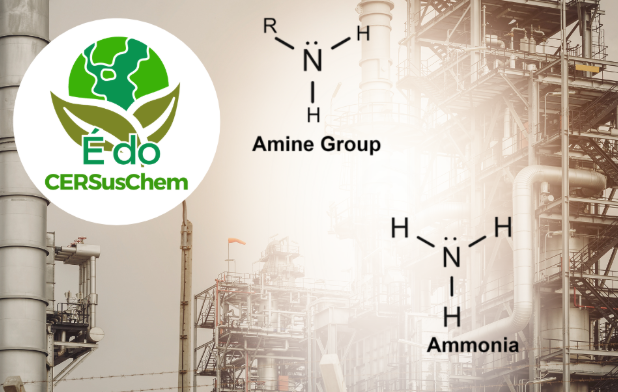
Researchers from the Center for the Development of Functional Materials (CDMF), a Research, Innovation and Dissemination Center (CEPID) funded by the São Paulo Research Foundation (FAPESP) and located at the Federal University of São Carlos (UFSCar), have proposed a more sustainable alternative for the industrial production of amines, a class of organic compounds found in many everyday products, including pharmaceuticals, cosmetics, herbicides, and pesticides. Currently, amine synthesis relies largely on ammonia (NH₃) produced through the traditional Haber-Bosch process, in which atmospheric nitrogen reacts with hydrogen under high temperatures and pressures. The resulting ammonia serves as the starting material for several sequential chemical steps leading to the production of nitrogen-containing compounds, including amines, which are characterized by a nitrogen atom bonded to one or more alkyl or aryl (aromatic ring) groups.
Although this production route is well established, it requires substantial energy input and is associated with significant carbon dioxide (CO₂) emissions, driving the search for cleaner synthetic approaches worldwide. In this context, the research team demonstrated the electrochemical production of amines directly from molecular nitrogen (N₂) gas and acetone, eliminating the need for the intermediate ammonia synthesis step. In this way, the approach has the potential to simplify the overall process, reduce energy demand and enable more sustainable production routes, particularly those compatible with electricity generated from renewable sources. The new method was developed in collaboration with researchers from the University of Bath, United Kingdom, and described in an article published in ACS Electrochemistry by a team led by Professor Lucia Helena Mascaro, Full Professor in the Department of Chemistry (DQ) at UFSCar, Director of CDMF and member of the Center of Excellence for Research in Sustainable Chemistry (CERSusChem), together with Professor Frank Marken from the University of Bath.
More specifically, the researchers developed an electrochemical system in which molecular nitrogen is activated at an electrode coated with molybdenum disulfide (MoS₂). This material acts as a catalyst, a substance capable of accelerating a chemical reaction, facilitating the formation of carbon-nitrogen bonds and enabling the direct conversion of N₂ and acetone, present in an aqueous solution, into isopropylamine (C₃H₉N) and diisopropylamine (C₆H₁₅N) in a single process, with diisopropylamine being the main product formed. The team also investigated different acetone concentrations and electrochemical conditions to determine which parameters optimize the reaction. Their results showed that there is an ideal acetone concentration for maximizing amine production. On the other hand, highly negative electrical potentials promote the formation of hydrogen gas (H₂), a competing reaction that reduces the efficiency of amine synthesis.
Overall, the authors highlight that the new methodology offers important advantages over conventional industrial routes. As stated in the article, the method “ may enable the production of important chemical raw materials under mild conditions,” including room temperature, atmospheric pressure and aqueous media, while also eliminating the need for toxic or expensive catalysts. According to the research team, this approach represents a promising strategy for producing higher-value nitrogen-containing compounds in a more sustainable manner. Beyond contributing to cleaner amine production, the method may broaden the use of atmospheric nitrogen in the synthesis of other industrially relevant molecules while making use of electricity from renewable sources. The full publication can be accessed by clicking here, and the news article published by FAPESP is available at: https://agencia.fapesp.br/eletrossintese-sustentavel-permite-produzir-aminas-diretamente-do-nitrogenio-do-ar/57944.